Inner Mongolian food
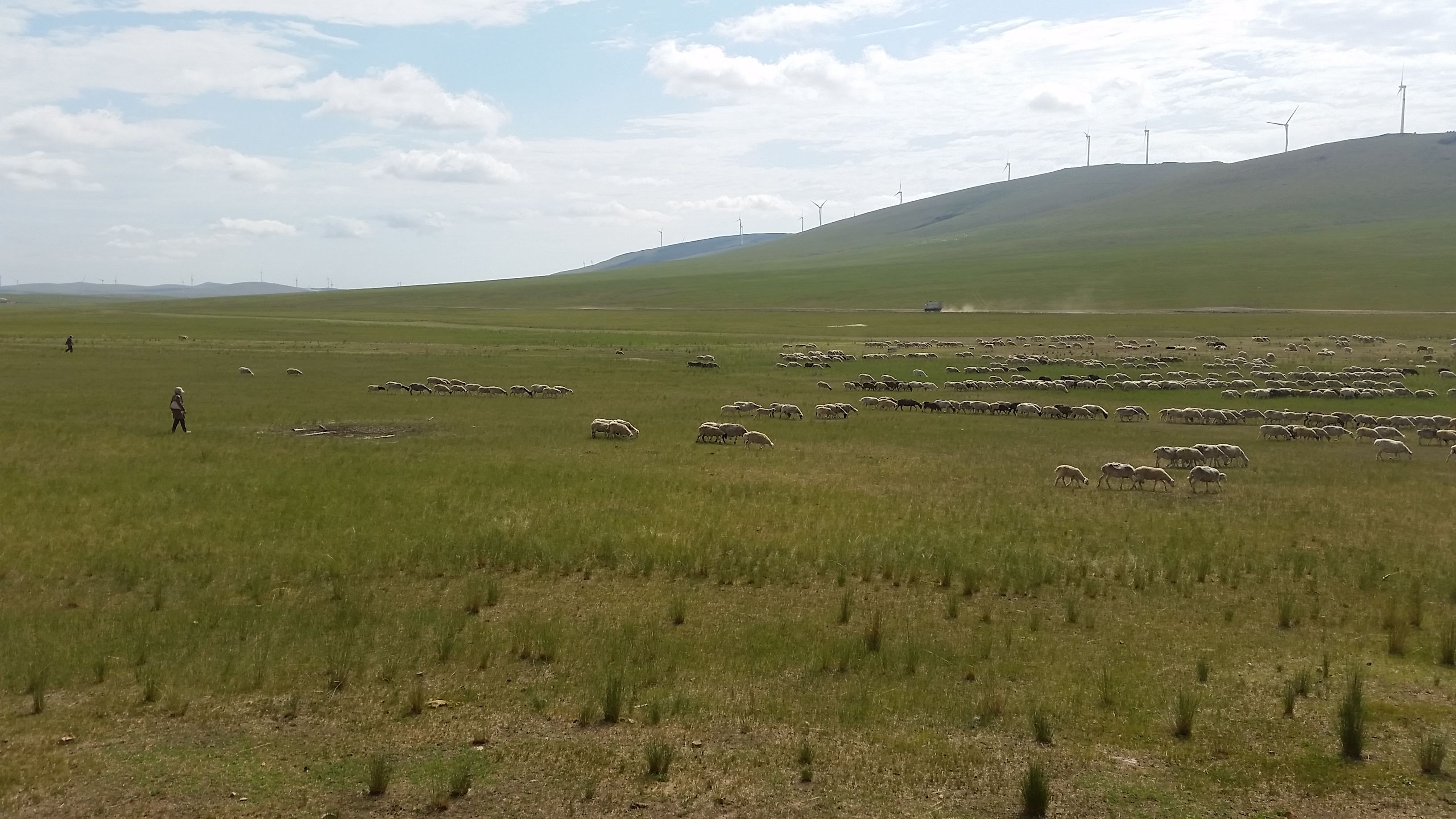 The grasslands of Inner Mongolia. Manzhouli, 2016
I just got back from China! It’s been ten years since the last time I went, and a whole twelve years since the last time I visited my family’s hometown of Hohhot in Inner Mongolia (or Neimeng). I always think of my life in 4 to 6 year chunks, and that’s a whole three chunks ago! And over the years and across the chunks, I’ve always been dreaming of one very specific meal: (Inner) Mongolian breakfast.
Here’s some pictures of the last time I ate this, in 2014:
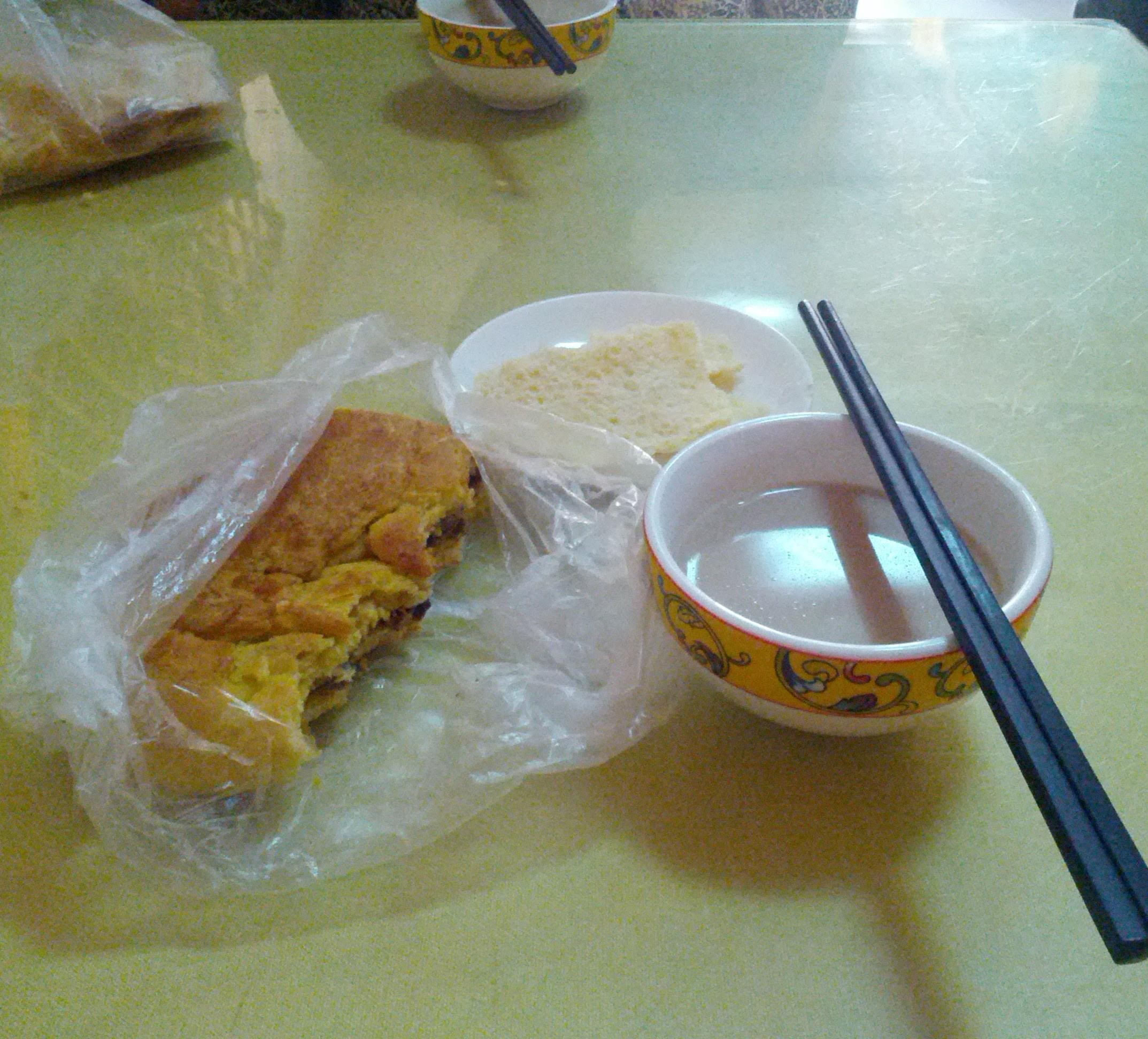
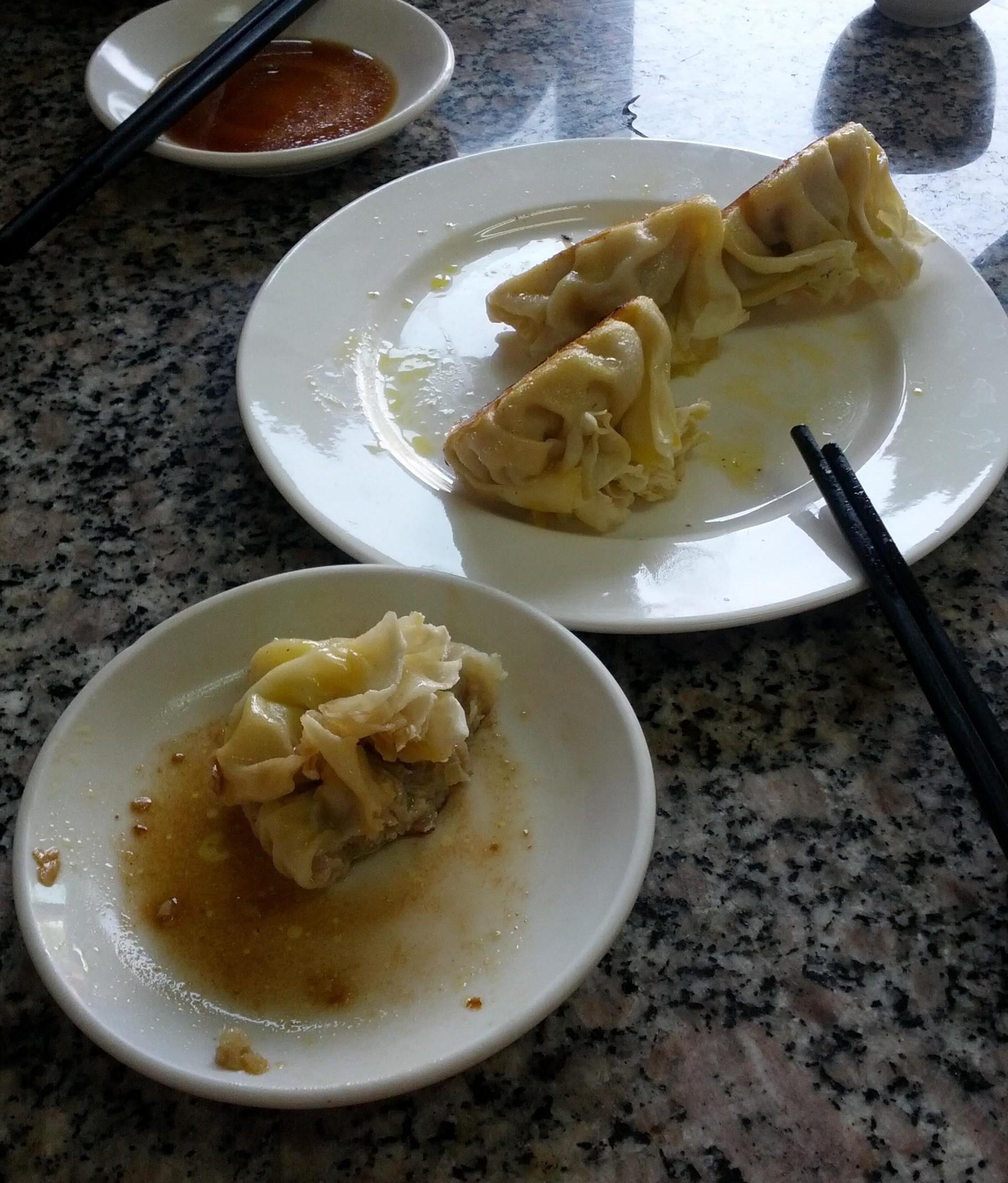
These are two typical Inner Mongolian breakfasts.
On the left is a true Mongolian breakfast of salty Milk Tea with some Milk “skin” which you dip into the milk tea, along with a Hohhot specialty sweet “Beizi” roasted bun with a brown sugar filling (there are many other sweet and salty variations).
On the right is a more Shanxi-influenced breakfast of fried Shaomai, the ORIGINAL shaomai that eventually got changed and (imo) bastardized into the Cantonese dim sum shumai. These are filled with juicy lamb chunks, ginger, and green onions in a very loose and thin wrapper, traditionally steamed but also served pan fried. Since Inner Mongolia and Mongolia proper are famous for sheep herding, the lamb is front and center with no gaminess at all.
I have this fuzzy memory where I get up late in my grandma’s home, and come out of the bedroom to a steamer of shaomai, a jug of milk tea, and a bag of milk skin all fresh from the little shop downstairs. It’s from a time before I touched physics, and before I truly cared about food. My nostalgia and reverence of this meal clashes with the tiny amount of information I can find about this food on English websites.
So here’s Inner Mongolian food.
Youmian (莜面)
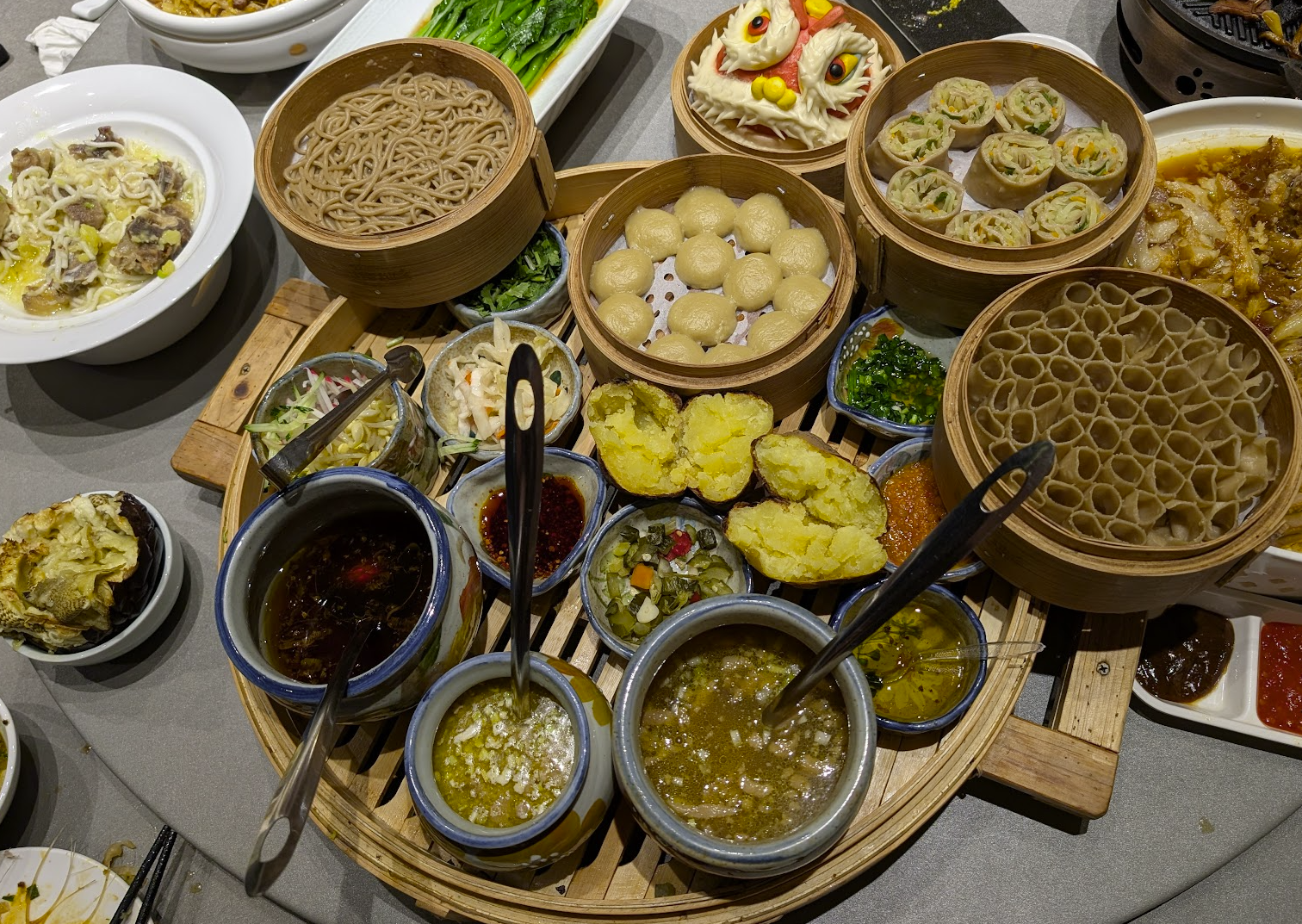 This is a Shanxi dish that spread to Inner Mongolia, and it’s just various types of noodles made from buckwheat/oat flour that are steamed and then eaten with sauce. The two styles I always remember are the honeycomb “wowo” on the right and the small fish-like “yuyu” on the top left, but this time we also had the lumps in the middle, the rolls to the top right, and a big dragon (?) head for photoshoot purposes.
The youmian came with a roasted round eggplant and roasted potatoes, various pickles and small dishes, and three broths/sauces: lamb, beef, and spicy. You’re supposed to mix together a bowl of sauce/broth, some eggplant or potato, and all the condiments, and then take some youmian to shovel it all in your mouth. This is insanely fancy compared to what I remember eating growing up, which was just a bowl of lamb soup with some veggies where you soak the wowo. I vividly remember hating it because there was a huge white, cooked bug in my bowl.
This was my parents’ white whale. We couldn’t find it in America for decades! When I asked a Shanxi restaurant about youmian, they said they never heard of it… maybe it’s northern Shanxi only? Fortunately, a popular youmian chain from Hohhot called Xibei actually made the jump across the Pacific all the way to the Arcadia mall a year ago. Though my mom and I went there and both agreed it sucked. They put some sweet tomato sauce on the wowo in a huge dish, charged a ton of money, and it tasted like crappy high protein pasta.
After going to Hohhot, my relatives there also said Xibei sucks, it’s not authentic, and that people go there to show off that they can afford it. Youmian is supposed to be cheap, eaten on the street, and not all that fancy! I did some digging and found people praising Xibei so I had to add my own two cents but it turns out Xibei is already going through some scandal about pre-making food. Whatever.
Mongolian cuisine (蒙餐)
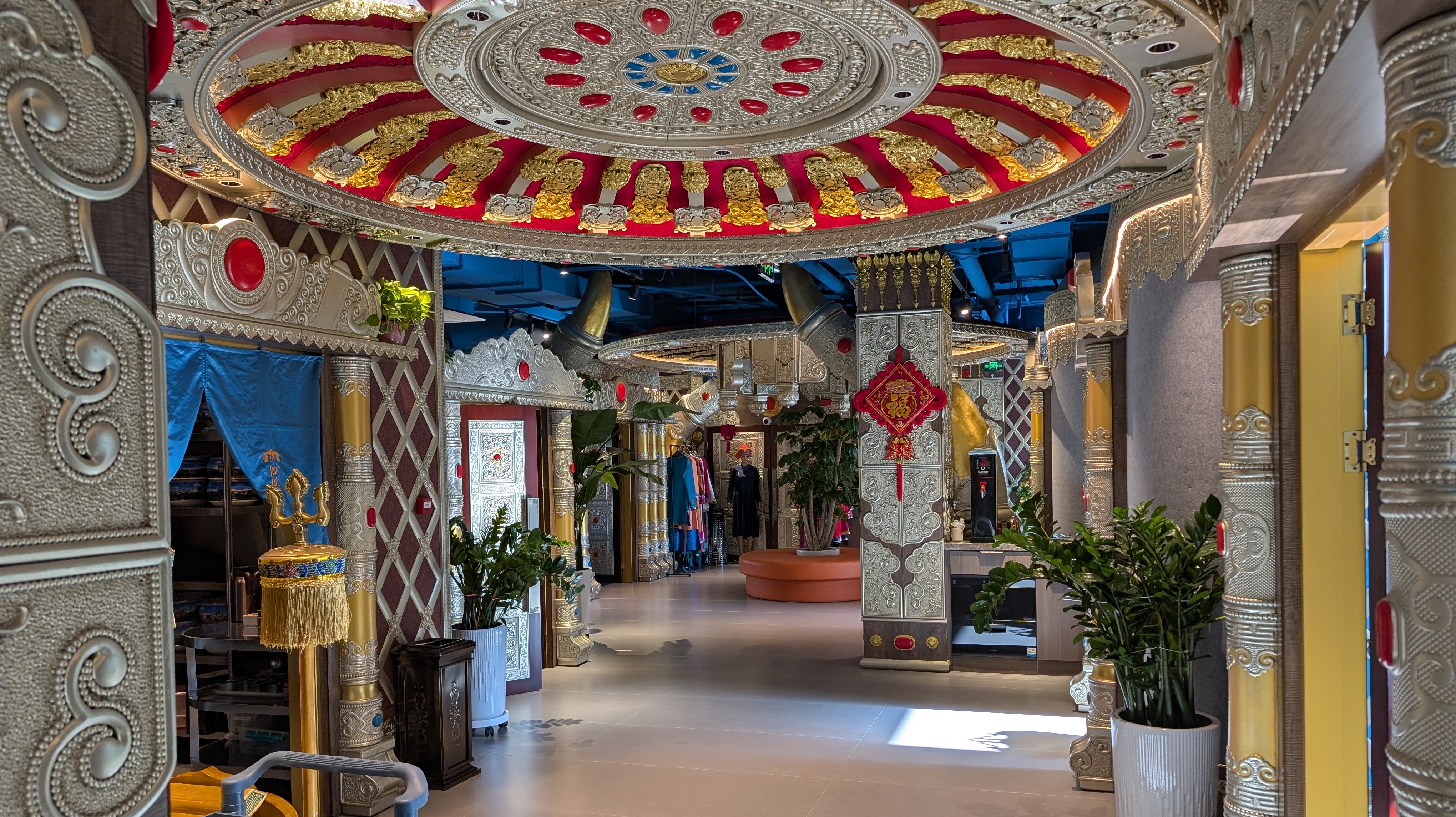 This meal was at a Mongolian restaurant (called Adahu, 阿哈都酒楼) where the private rooms looked like yurts. I don’t think it’s exactly like what people would eat in Mongolia proper, but more like Mongolian food in Inner Mongolia.
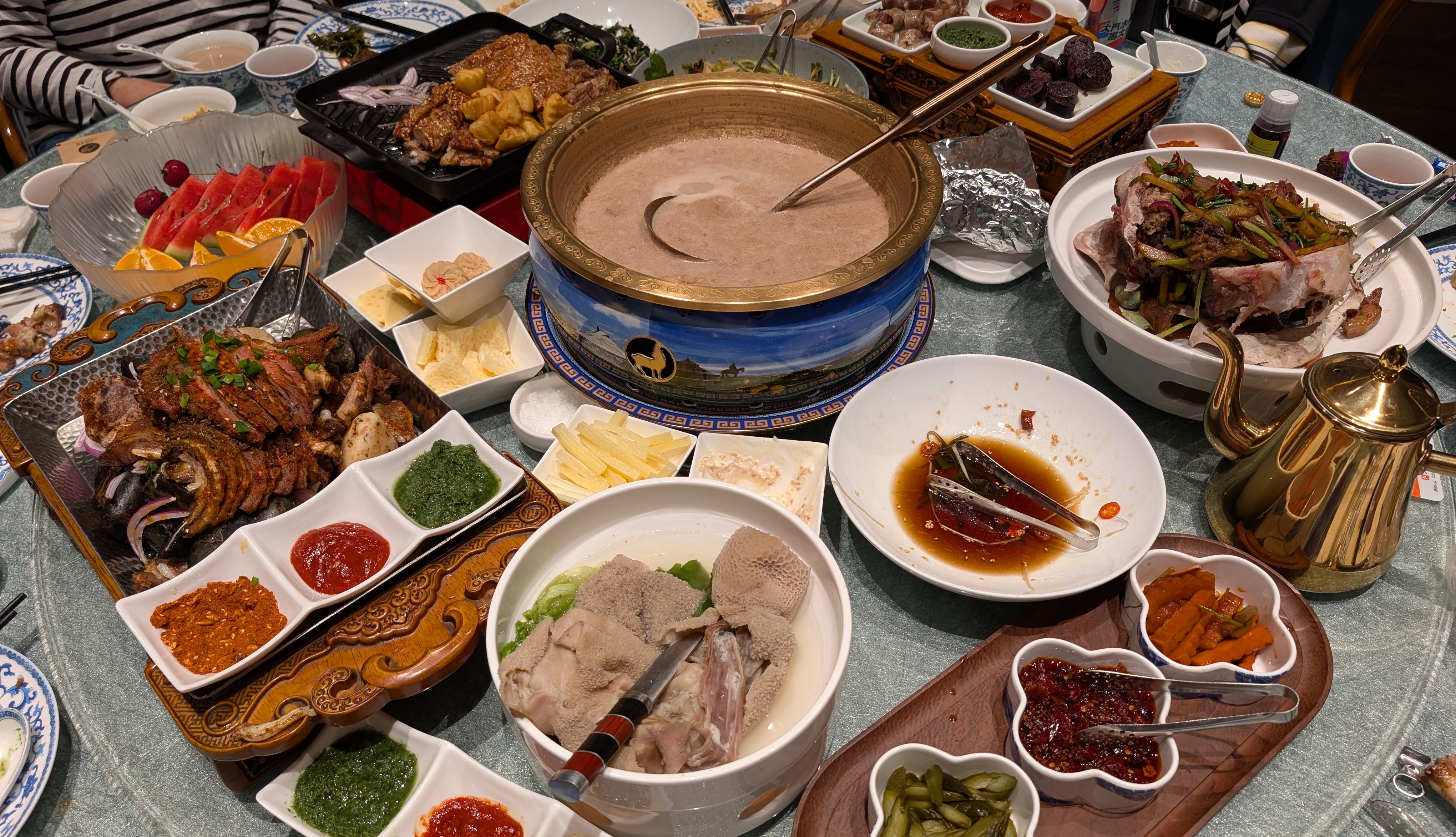 There’s a lot to highlight, but starting from the top clockwise around the edge of the table: meat and blood sausages, lamb head meat, hand-torn tripe (which they provided just boiled with a knife), beef ribs, lamb ribs. In the middle is the food of the gods: milk tea…
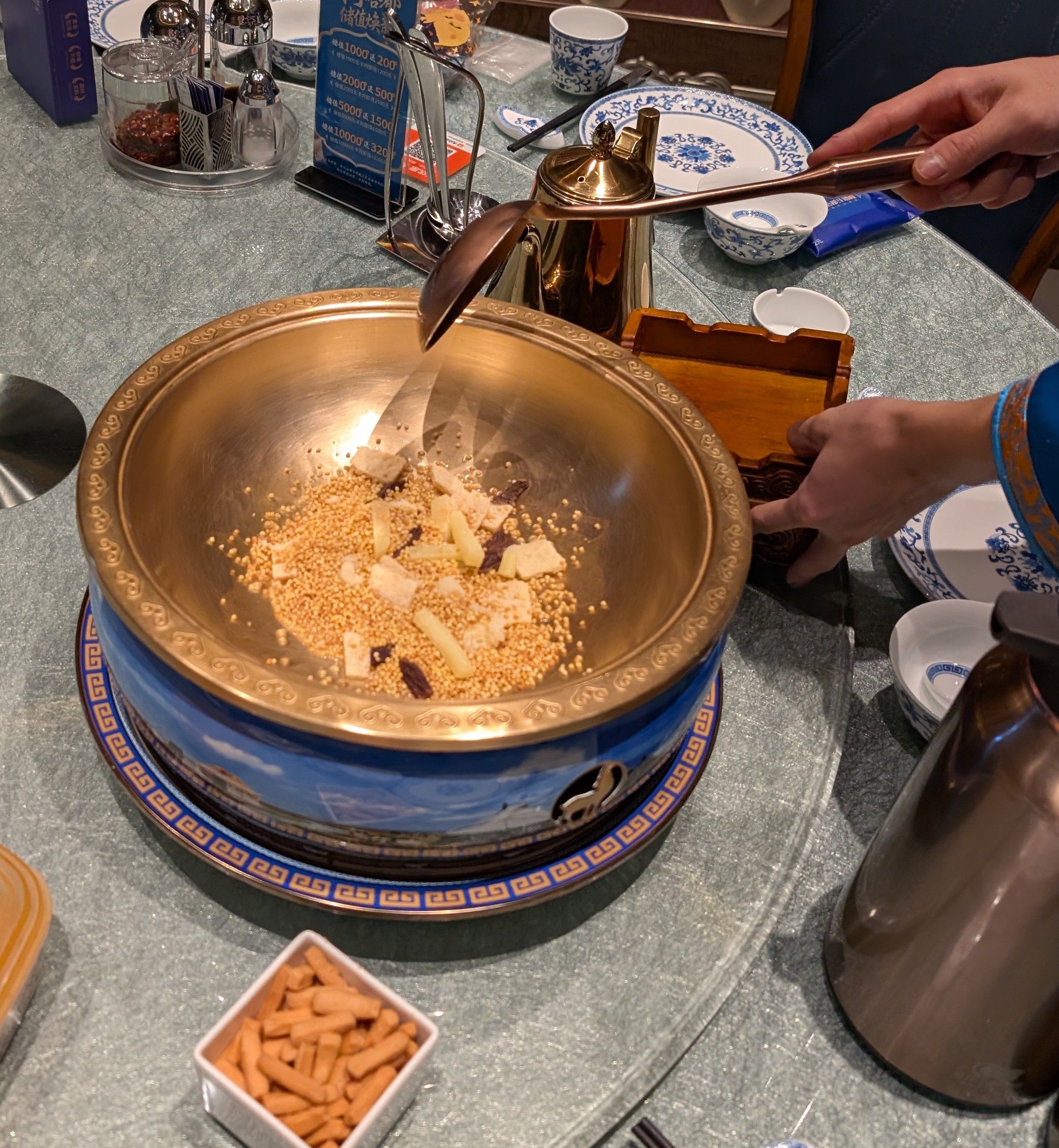 Cooking the milk tea
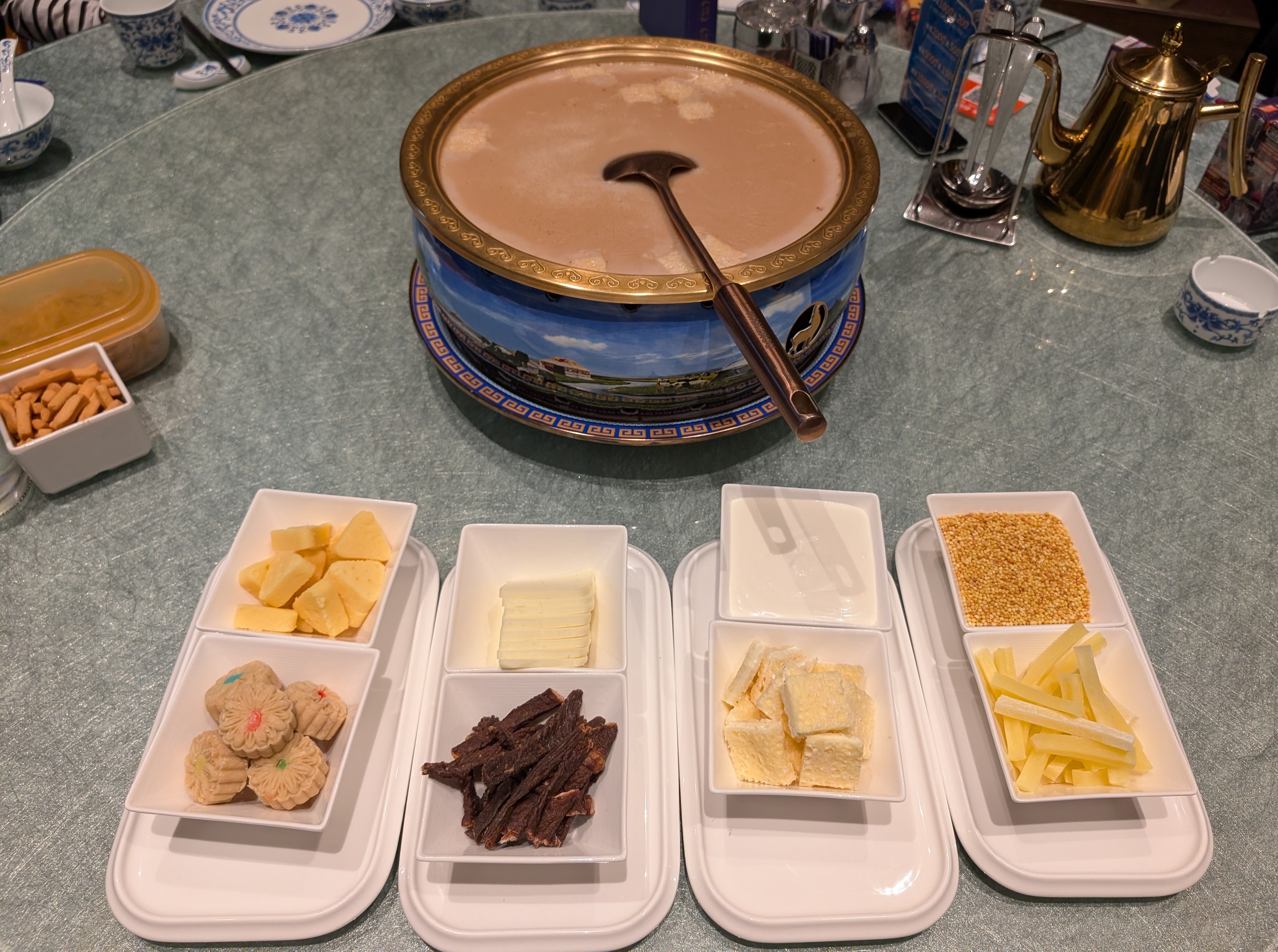 Milk tea essentials
First you need to fry the tea. A staff member stir fries millet, beef jerky, and a few kinds of Inner Mongolian milk products (milk skin, milk tofu, etc.) in a big hot bowl until it’s fragrant, then pours in salty milk tea made with zhuancha brick tea. Then they give even more millet, beef jerky, and milk products which you dip into your bowl of milk tea. I think they call it pot tea, maybe?
The beef jerky is an Inner Mongolian specialty. Actually, everything is an Inner Mongolian specialty. But this beef jerky is fully dessicated and breaks like a twig, and is packed with pure beef flavor. I love beef jerky and the American plain kind is always a bit smoky or salty, but this stuff is pure meat. You keep it in your mouth and let the deep flavor slowly release as it softens, and it just gets better and better as you chew more and more until it’s suddenly gone.
I keep calling them milk products because they’re not exactly cheese and they’re not really milk. They span a full range: very sour yogurt, pure oil flavored milk skin, incredibly sweet, dense cheese-like things, soft milk tofu and tough milky sticks. But all of them except the yogurt go great in incredibly strong milk tea. It’s everything I dreamt of, and more.
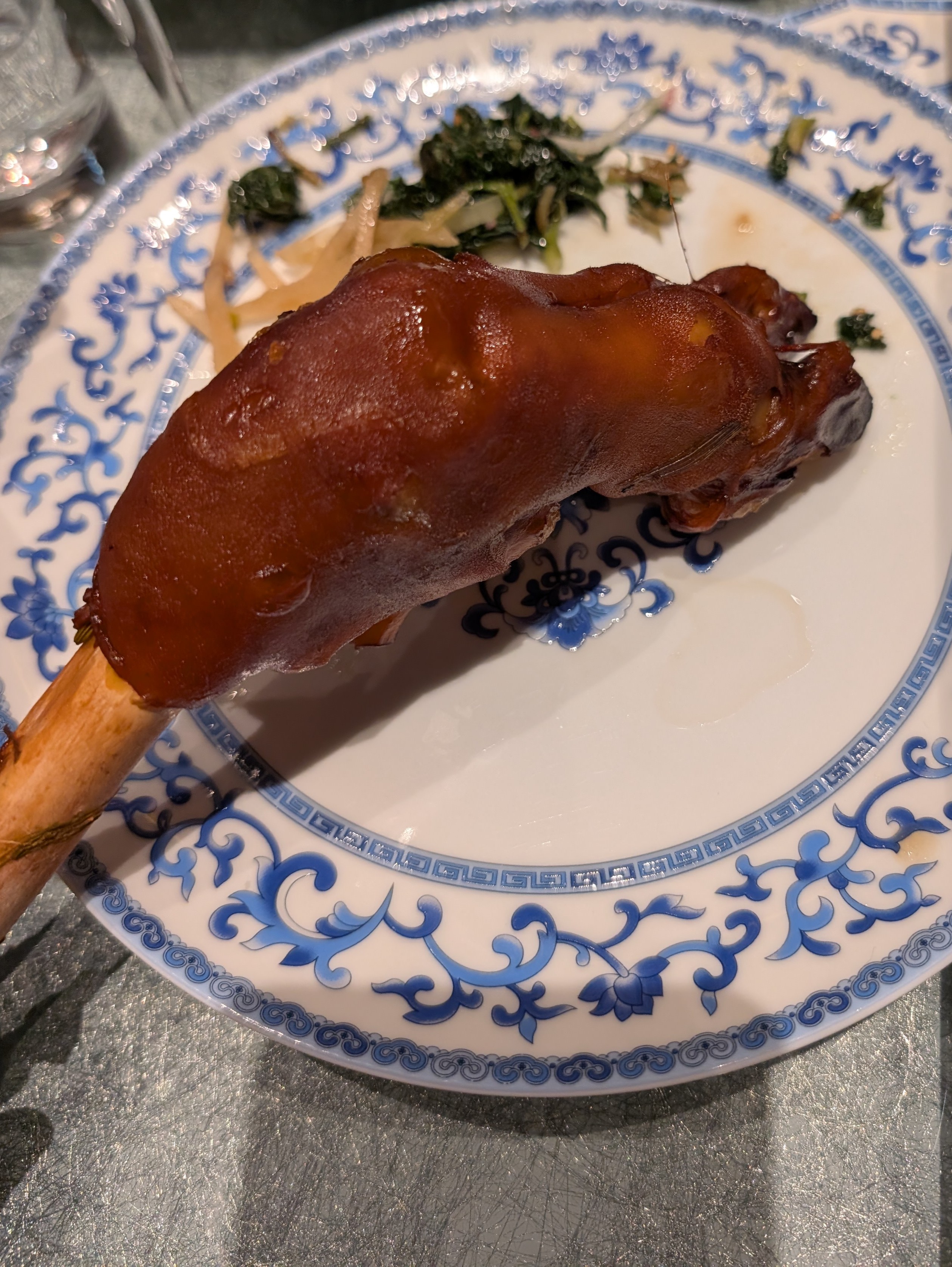
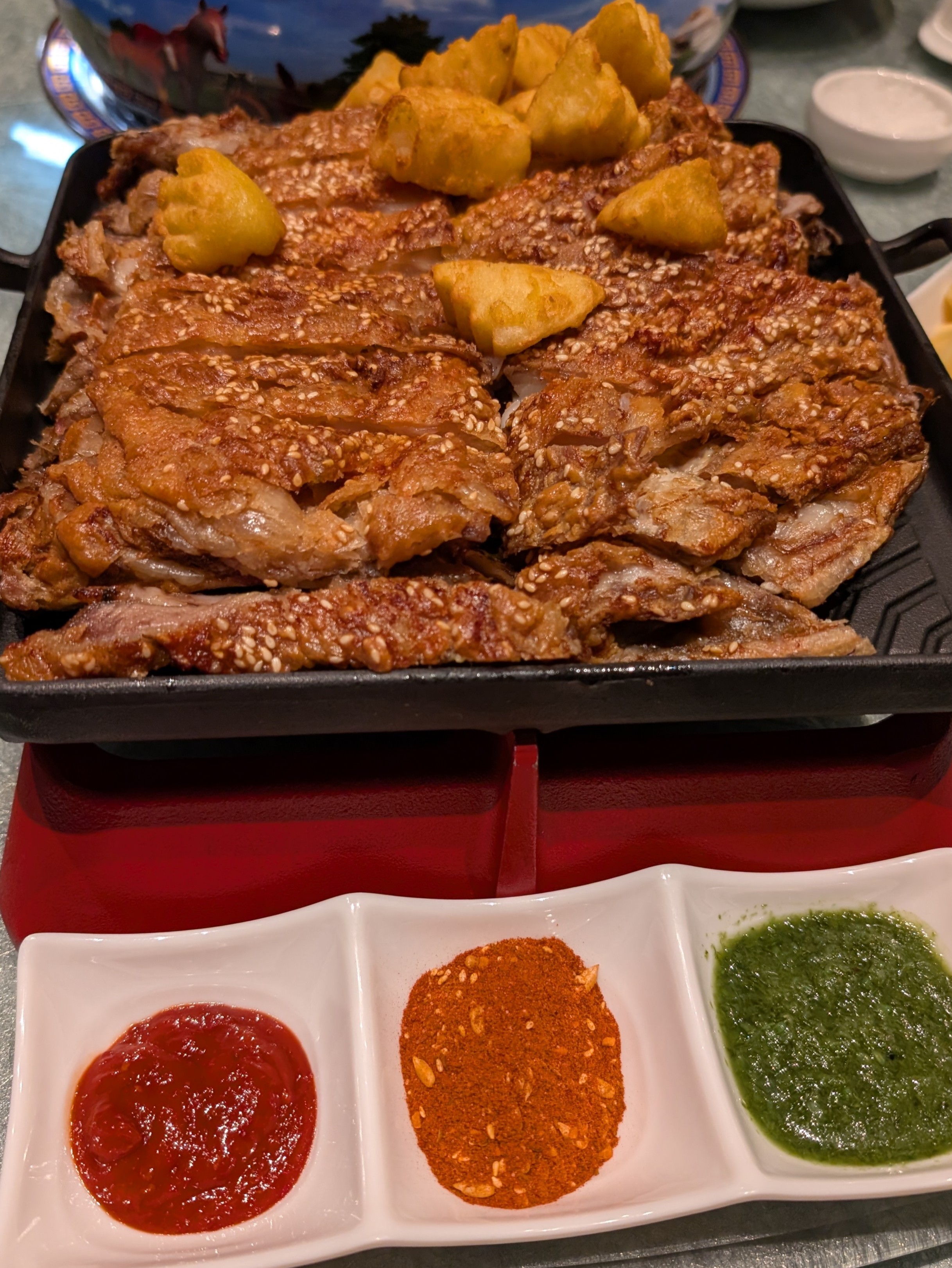
Inner Mongolia is famous for grasslands, herding sheep, and eating lamb. In this one meal we ate four or five lamb dishes, and my lowlight was the lamb trotter. I never like pig trotters so this was also just overly rich for me. But, the roasted lamb ribs were the highlight of the whole trip. The fatty, juicy lamb meat sits right under a crispy seasoned crust, and it doesn’t even need the dipping sauces on the side. In the end, meat and potatoes is always the best.
Ice Boiled Lamb (冰煮羊)
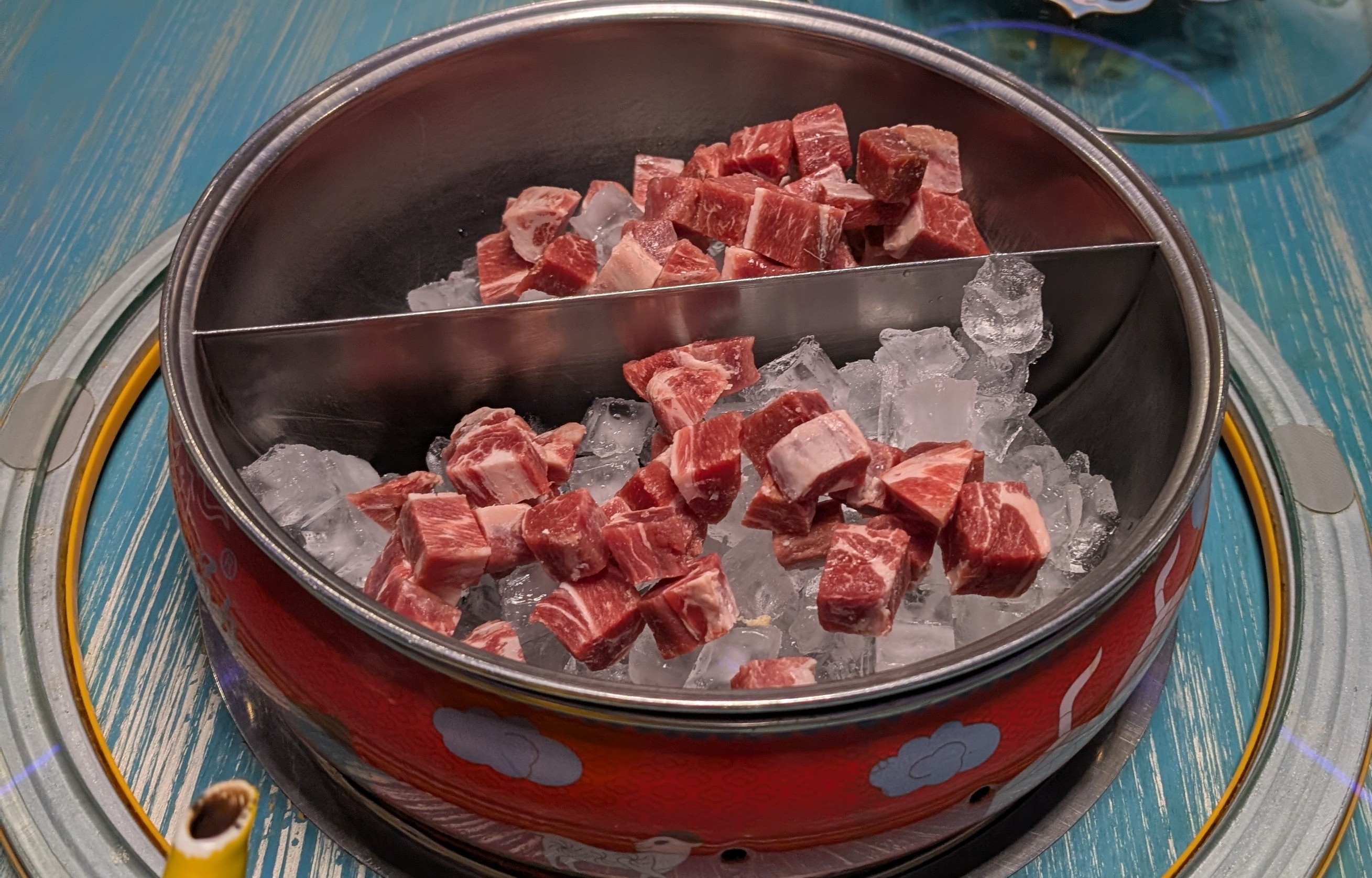
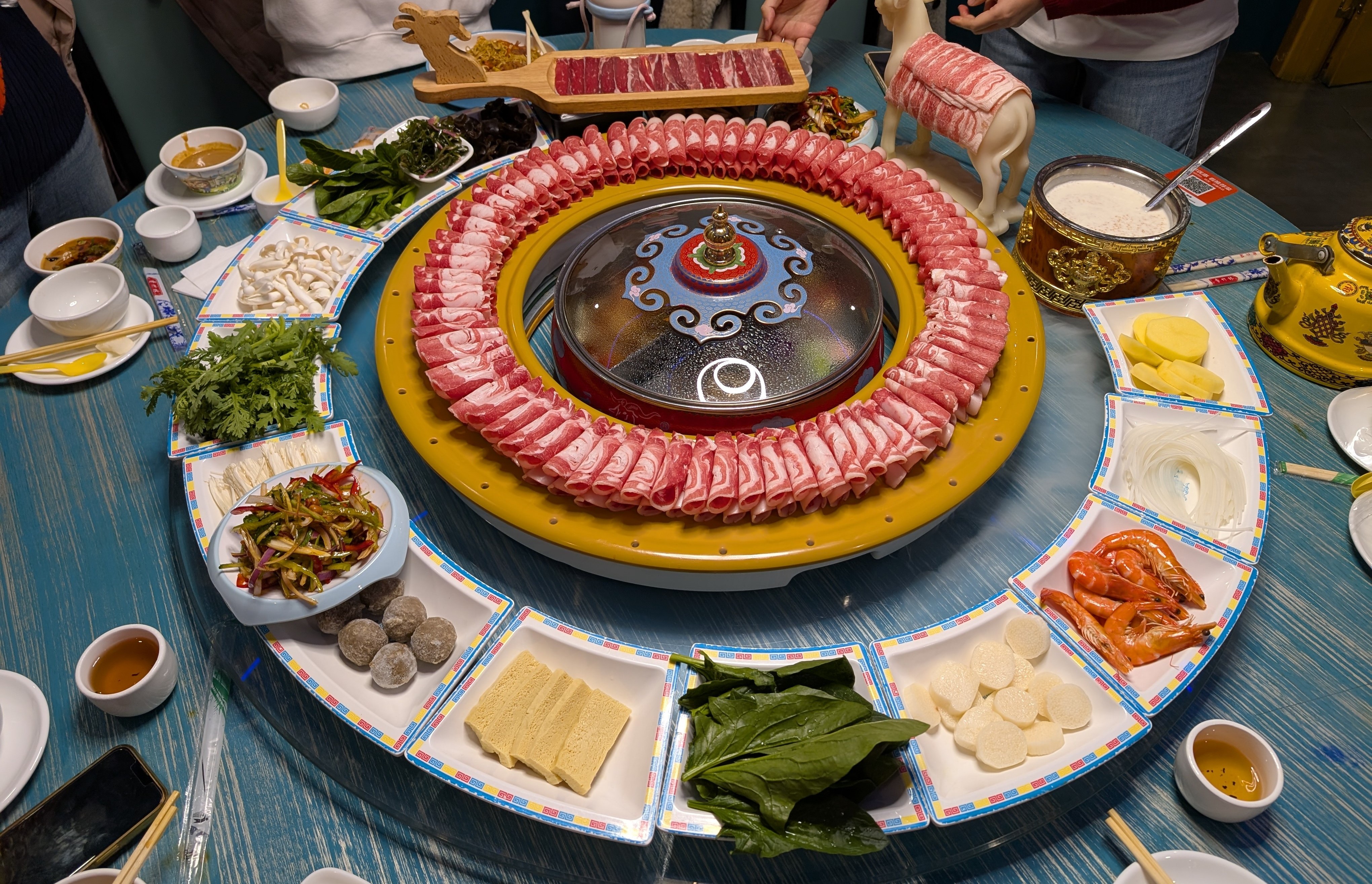 While we did eat classic lamb hot pot it was in Beijing, and you can get it at Happy Lamb so I didn’t include it here. The slightly weirder lamb hot pot we tried was “Ice Boiled Lamb” which I hadn’t heard of before. The gimmick is that you start with thicker lamb cuts over ice, and somehow this makes the meat really tender without overcooking/toughening up (??). The rest is basically standard lamb hot pot, using sesame sauce as the traditional dipping sauce.
Besides the flashy presentation, another flashy feature was dry ice under the frozen lamb cuts to keep them cold a bit longer. Fog kept seeping out making it pretty interesting? Seemed like a very Chinese thing to do, overly showy.
We got suannai (sour yogurt) with millet and milk tea along with the meal, of course. I also tried horse milk liquor which was incredibly sweet and not worth it.
Shaomai (稍麦)
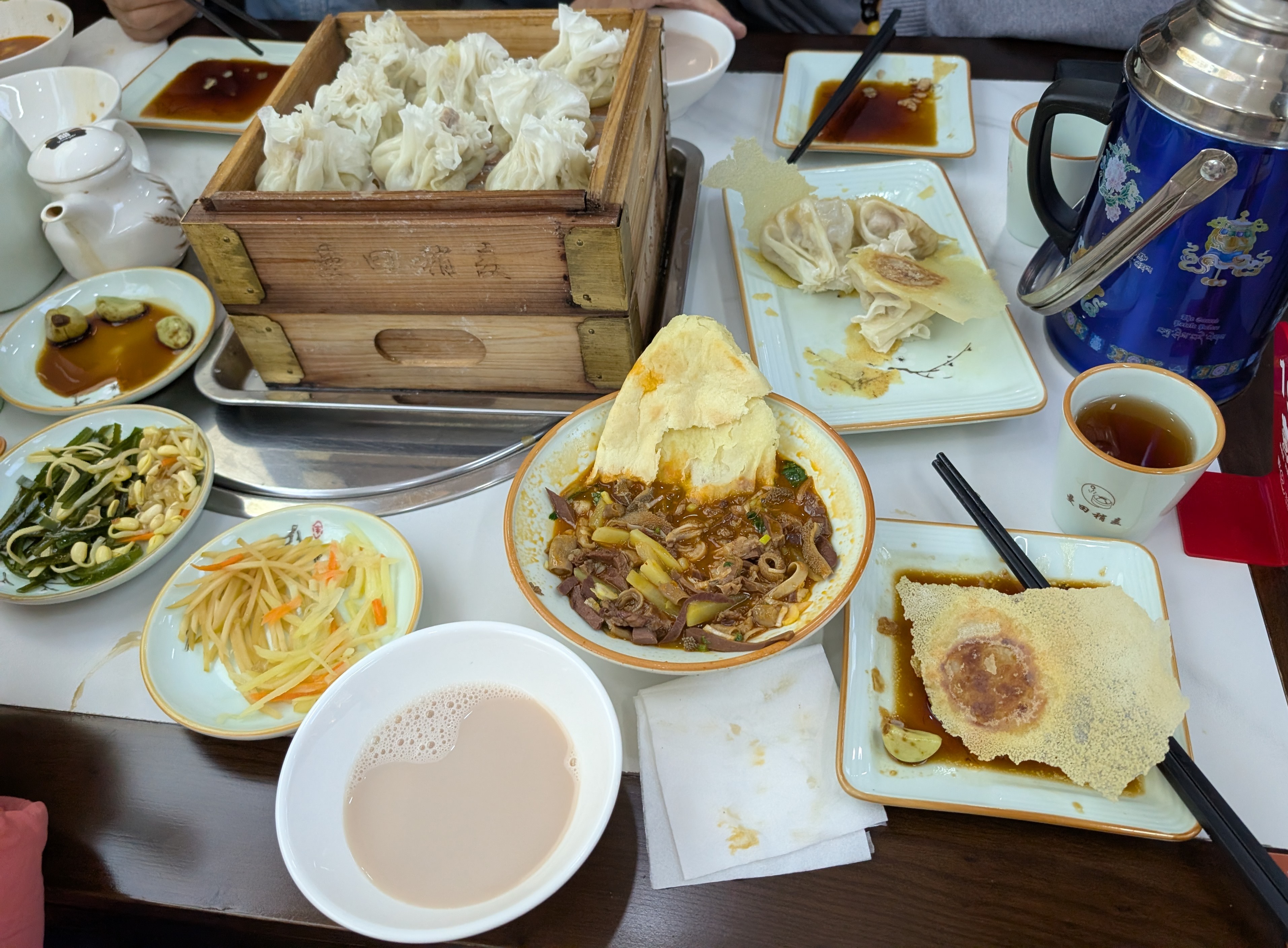
My beloved, my Holy Grail of food, shaomai. I ate it three meals in a row right before leaving Hohhot, and this was my favorite. We went to a chain restaurant (曼田稍麦) in the morning, and it was filled with old guys sitting by themselves, smoking, drinking tea, and eating shaomai. We got milk tea (duh), brick tea (duh), and various pickled cold dishes to cut through the rich lamb shaomai. We also got classic Hohhot beizi and dipped them into a bowl of chopped-up lamb innards (yangzasui, center).
The vibe of the restaurant was so mundane. It was everyday for the bros sitting next to us, just chilling and eating breakfast at their local chain store, but it was the meal of my dreams, the taste of that nostalgic memory. I’m kinda glad we didn’t specifically look for the most fancy, highest rated shaomai place in town, because the only thing that could’ve enhanced it for me was if it was out on the street in the shade against the summer sun, a lifetime ago.
And for a quick minute, eating a shaomai dunked in vinegar, taking a bite of pickled garlic, and washing it down with brick tea… I felt like I could’ve gotten up out of the restaurant, onto my moped with my own little winter apron, and rode off to a different life in Hohhot.